Nigeria Endorses AU Institutional Reforms on Peace, Security at 39th African Union Summit
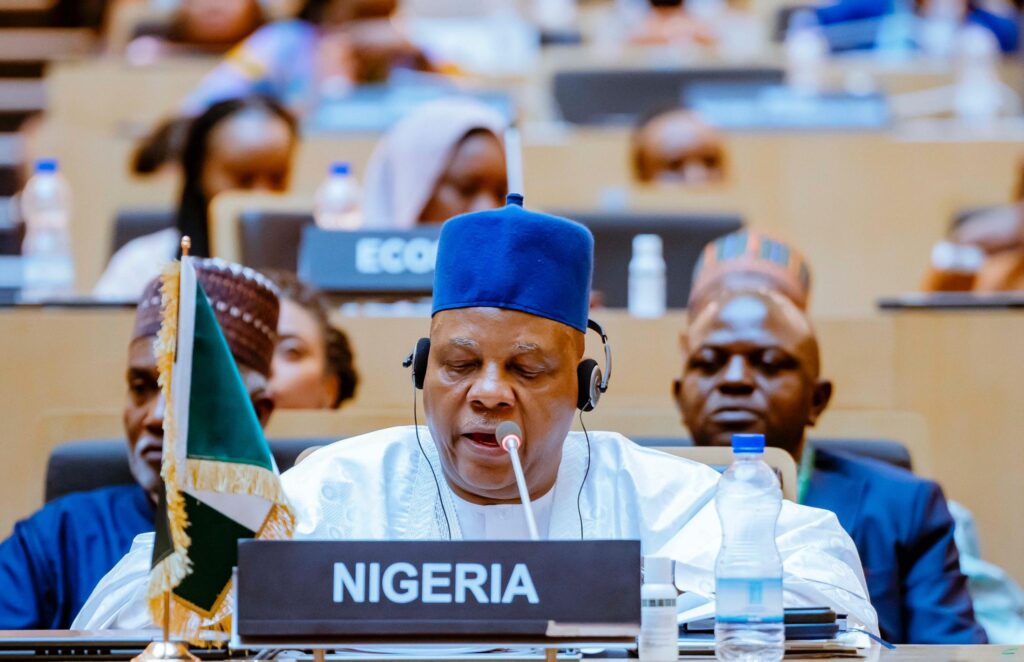
Nigeria has thrown its weight behind proposed institutional reforms in the African Union, emphasizing improvements in peace and security governance, democratic institutions, and partnerships with international financial institutions and the private sector.
At the 39th Ordinary Session of the Assembly of Heads of State and Government in Addis Ababa, Ethiopia, Vice President Kashim Shettima represented President Bola Tinubu during a closed session. Shettima presented Nigeria’s positions following the report on thematic agenda items, including peace and security, integration and sustainable development, and Africa’s voice.
Commitment to Maritime Security and Peace Initiatives
Vice President Shettima commended the Peace and Security Council for endorsing the Combined Maritime Task Force for the Gulf of Guinea as a standby force for rapid and coordinated maritime security responses across the region. He pledged Nigeria’s commitment to implementing its part of the agreement and strengthening the African Union Standby Force.
“The proliferation of small arms and light weapons remain the greatest causes of armed conflict and violent extremism in our region. This is why our union must refocus its attention on curbing these trends,” Shettima stated.
As the host of the taskforce headquarters, Nigeria will provide necessary infrastructure, including office facilities, ships, helicopters, and temporary staff to ensure the force’s effectiveness. Nigeria remains committed to fully implementing its obligations.
On the review of membership criteria for the Peace and Security Council, Shettima associated Nigeria with innovative proposals for inclusion of a new clause. He supported modalities for cooperation between the African Union and its regional economic communities and mechanisms, as envisaged in Article 5 of the protocol establishing the Peace and Security Council.
“It is our view that this is necessary to ensure predictability and effectiveness in our peace and security governance. We also agree on the imperative to strengthen coordination between the peace and security council and the C-10 committee, particularly at the ambassadorial level,” he added.
Support for Democratic Reforms and Regional Reintegration
Nigeria supports reforms to strengthen democratic institutions across Africa. Shettima commended the AU’s efforts to address unconstitutional changes of government and underscored the imperative for good governance.
The Vice President announced President Tinubu and Nigeria’s endorsement of the AU’s decision to lift the suspension of Gabon and Guinea’s participation in union activities. “Nigeria welcomes Gabon and Guinea back to our union after the completion of their political transitions. We call on other countries with protracted political transitions to follow the approach to return to the fold,” Shettima declared.
Boosting Resource Mobilisation and Inequality Reduction
Nigeria aligned with proposed restructurings to enhance domestic and regional resource mobilisation for affordable development financing. The country also backs the adoption of a continental framework on reducing inequality, built on credible data, social protection, productive jobs, and inclusive industrial policies.
Focus on Critical Minerals and Food Security
On critical minerals and the industrial value chain, Shettima reiterated Nigeria’s stance that “Africa’s mineral resources are strategic assets that should drive industrialization and structural transformation.” He emphasized coordinated continental approaches to ensure mineral extraction supports local processing, manufacturing, and technology development.
The Vice President called for regular briefings by African mining ministers to promote accountability and transparency. Nigeria welcomes the G20 Ubuntu approaches on food security and supports responsible private sector participation across agricultural value chains.
“Nigeria calls for greater investment in storage, logistics, research, climate resilience agriculture and support for smallholder farmers, particularly women and the youth as well as reaffirms its commitment towards advancing Africa’s food systems transformation,” Shettima stated.
Shettima also highlighted efforts on combating transnational organised crimes and boosting the continent’s blue economy.
Broader Context of the Summit
Various heads of delegation from African Union member states made interventions on the report covering the thematic areas of the reforms. The session addressed key challenges facing the continent, with Nigeria positioning itself as a proactive leader in fostering unity and progress.
The endorsements reflect Nigeria’s strategic priorities in regional stability, economic development, and governance. By hosting key infrastructure for the maritime task force and committing resources, Nigeria underscores its role in continental security architecture.
These positions align with ongoing efforts to make the African Union more effective in addressing peace, security, and development imperatives. Nigeria’s support for reintegrating suspended members signals a push for inclusive continental engagement.
The summit outcomes could pave the way for enhanced cooperation, potentially leading to more predictable peace mechanisms, better resource mobilisation, and inclusive growth strategies across Africa.
Released by Stanley Nkwocha, Senior Special Assistant to the President on Media & Communications in the Office of the Vice President, the statement captures Nigeria’s comprehensive engagement at the summit on February 15, 2026.