Petrol Prices May Surge to N1,000 per Litre as Dangote Refinery Hikes Gantry Price Amid Global Oil Volatility
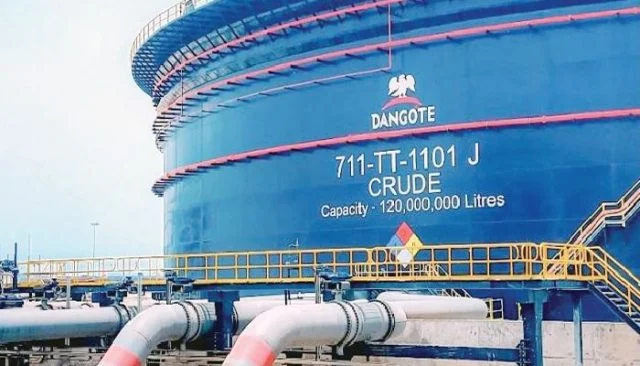
The price of Premium Motor Spirit (petrol) at retail pump stations across Nigeria may soon climb to between N980 and over N1,000 per litre, depending on location, following a fresh increase in the gantry price by the Dangote Petroleum Refinery.
This development, confirmed by industry stakeholders, stems from volatility in the international crude oil market and recent surges in global prices. A senior official at the refinery stated that the gantry price has been reviewed to N874 per litre from the previous N874, necessitated by changes in global crude fundamentals and replacement costs.
Dangote Refinery’s Price Adjustment and Operations
The refinery issued a notice to marketers, stating: “Dear Valued Customer, we are pleased to inform you that PMS is currently available for purchase. Please be informed that the current price is N874 per litre. Thank you for choosing Dangote.” Checks by petroleumprice.ng confirmed that the revised rate has been reflected across the downstream value chain.
The price hike followed a temporary suspension of petrol loading operations at the refinery effective midnight on March 2, 2026, after global crude oil prices surged above $80 per barrel. While petrol loading was paused, Automotive Gas Oil (diesel) supplies continued uninterrupted. Several depot owners also suspended petrol sales to reassess replacement costs, with a downstream operator noting, “Several depot owners halted PMS sales because of the crude rally. The market is already factoring in risk premiums. Nobody wants to sell below replacement cost.”
Chinedu Ukadike, National Publicity Secretary of the Independent Petroleum Marketers Association of Nigeria (IPMAN), confirmed the likely retail impact in a telephone interview. “Following the increase by Dangote, the pump price will likely range between N980 and over N1,000 per litre, depending on location and logistics. This is largely the effect of the recent hike in global crude oil prices,” Ukadike said.
Global Triggers: US-Iran Tensions and Oil Market Surge
The refinery’s adjustment aligns with heightened volatility in global oil markets, driven by escalating tensions between the United States and Iran. Oil prices surged sharply on Monday, with Brent crude for April delivery rising 8.7 percent to $79.28 per barrel, and West Texas Intermediate gaining 7.8 percent to $72.16 per barrel.
This followed a coordinated U.S.-Israeli operation targeting Iranian missile facilities and command centers, reportedly resulting in the deaths of Iran’s Supreme Leader, Ayatollah Ali Khamenei, and nearly 50 senior Iranian officials. Iran retaliated with missile and drone strikes on Israel and U.S. military installations in the Persian Gulf, including Bahrain and the United Arab Emirates, causing at least 11 fatalities in Israel and three U.S. service members killed, with five wounded.
Although the Strait of Hormuz has not been formally closed, shipping activity has declined by approximately 70 percent due to security risks. An estimated 200 tankers carrying crude oil and liquefied natural gas have anchored or rerouted, while major lines like Hapag-Lloyd and CMA CGM halted transits. War risk insurance premiums rose by up to 50 percent, inflating passage costs. The strait handles 20–21 million barrels daily—about 20 percent of global oil consumption and 30 percent of seaborne crude trade.
Five energy experts warned of further petrol and diesel price increases in Nigeria if crude exceeds $90 per barrel. Analysts noted that sustained Middle East hostilities could disrupt supply chains, elevate shipping and insurance costs, and raise refined product prices, despite Nigeria’s expanding domestic refining. JPMorgan Chase projected Brent crude could hit $120 per barrel if conflict disrupts Hormuz flows, as Gulf producers could sustain output for only 25 days before storage overflows.
Dangote’s Broader Industrial Vision
Amid these challenges, Aliko Dangote, President of the Dangote Group, unveiled plans to invest in electricity generation, steel production, and port infrastructure to industrialise Africa and bolster domestic energy security. “We have to industrialise Africa,” Dangote said in a recent interview with The New York Times, emphasising reliable power for economic growth.
The Dangote Group currently operates over 1.5 megawatts of electricity, contrasting Nigeria’s national generation below 5,000 MW. The Dangote Petroleum Refinery & Petrochemicals is operational, producing about 650,000 barrels of refined products daily, with output expected to double in three years. It employs about 30,000 workers, 80 percent Nigerians, and expansions could raise group employment to 65,000.
Dangote announced plans to list refinery shares on the Nigerian stock market for broader participation. He acknowledged challenges like logistics and crude supply inefficiencies, stating, “Nobody dared to do it, so we did it.” His vision targets reducing import dependence, retaining economic value in Africa, and addressing Nigeria’s need for 40–50 million jobs by 2030.
Industry observers view Dangote’s moves into power, steel, and ports as complementary to refinery investments, including the price adjustment, fostering a holistic approach to industrialisation and energy security. Energy analysts warn the petrol increase reflects both global volatility and Dangote’s strategy to fortify Nigeria’s energy sector.
Implications for Nigeria’s Fuel Market
The N874-per-litre gantry price positions retail rates to reach or exceed N1,000, especially if tensions persist. This highlights Nigeria’s fuel pricing sensitivity to global markets, even with growing domestic refining. Dangote’s ambitions—from refining and electricity to steel and logistics—aim to stabilise fuel supply, drive industrialisation, create jobs, and enhance economic resilience.
As the refinery navigates international disruptions, its role in mitigating vulnerabilities grows critical. The current dynamics underscore private sector potential in transforming Nigeria’s energy landscape and supporting broader continental growth.
Source: https://cedmagazineng.com/2026/03/03/petrol-may-hit-n1000-litre-as-dangote-hikes-price/